
Stablecoins as a rail, not a bet
 VANK · 003
The word "stablecoin" arrives with baggage.
For many people it sounds like crypto, like volatility, like speculation. And that’s understandable: the crypto world is full of yield promises and charts that go up and down.
But for a company that needs to move money between countries, a stablecoin isn’t a bet. It’s a rail.
What a stablecoin really is
A stablecoin like USDC or USDT is designed to hold parity with the dollar: one unit aims to represent a digital dollar. It doesn’t swing like bitcoin.
It’s worth stating precisely: it’s designed to be stable, which isn’t the same as being guaranteed immovable. On the secondary market there can be temporary deviations —for example, USDC briefly lost parity during the Silicon Valley Bank crisis in 2023, and recovered it afterward. Stability is the design goal and the usual practice, not an absolute guarantee at all times and on every network.
With that nuance clear, the core idea holds: a digital dollar that behaves like a dollar, but moves at internet speed.
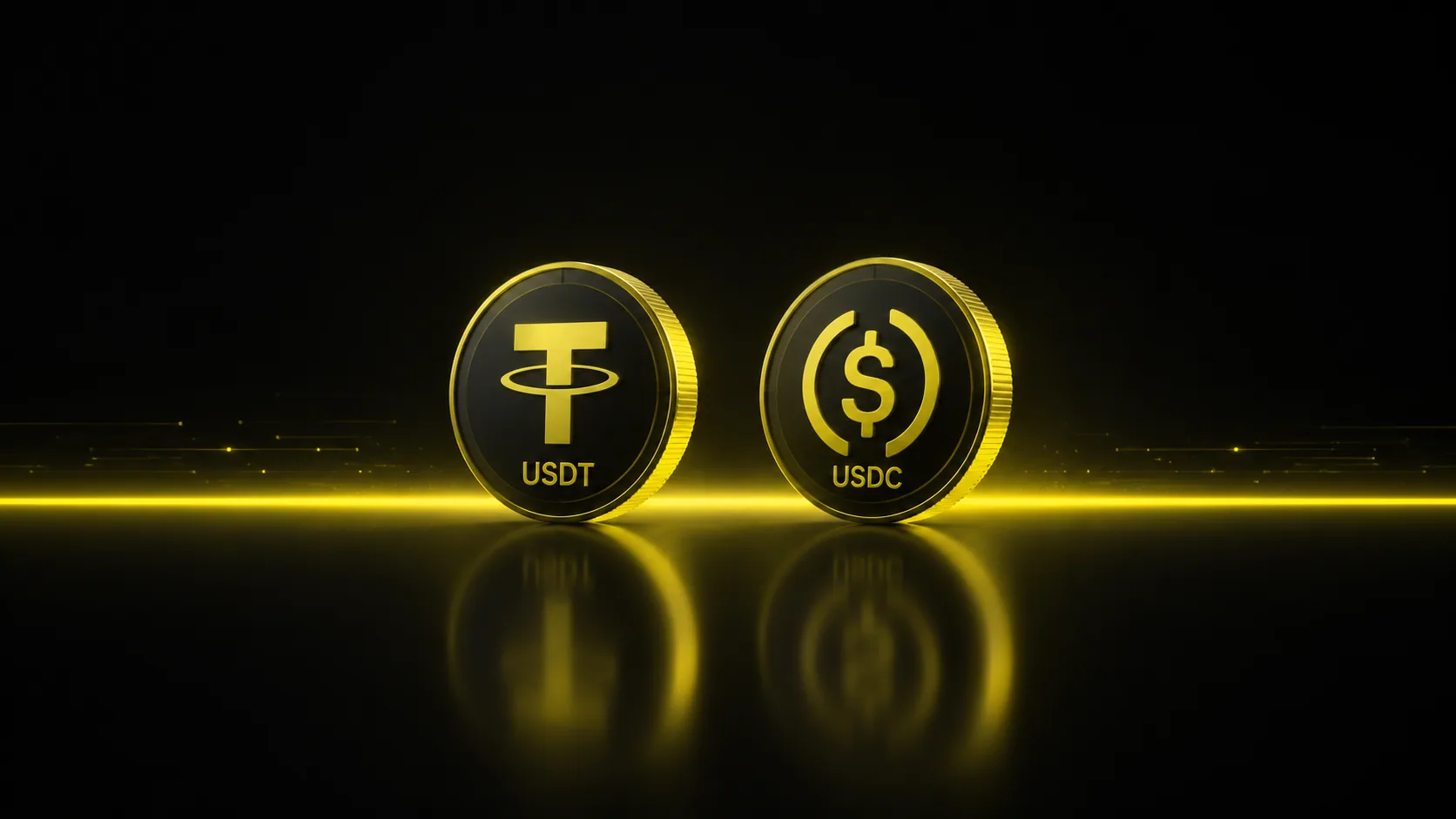
USDC and USDT are not the same
The common mistake is treating them as identical. Commercially it’s understandable; editorially, it isn’t.
USDC and USDT are the most used stablecoins for moving digital dollars, but they don’t share the same issuer, regulation, liquidity or transparency profile. Circle states that USDC is redeemable 1:1 and backed by cash and liquid equivalents, with monthly reserve attestations. Tether (USDT) has enormous liquidity and global adoption and claims to be 100% backed by its reserves, with a different transparency profile.
For a company, the decision isn’t only which stablecoin to use, but under which controls, network and provider to operate it.
The distinction that matters
There are two completely different ways of relating to digital assets.
One is speculation: buying bitcoin or ether hoping its price goes up. That’s a bet —the value can rise or fall, and no one guarantees it.
The other is infrastructure: using a stablecoin to settle a payment. That’s a rail.
A company that collects in USDC and converts it to pesos isn’t betting on anything. It’s using a digital dollar to move value faster. And stability is exactly the point: if the currency were volatile, it wouldn’t work as a rail. No one settles an invoice with something whose value can change 10% between sending and receiving it.
A volatile asset is a bet. A compliant stablecoin is infrastructure. They’re not the same, even though both live on a blockchain.
The problem it solves for a company
Paying or collecting between countries the traditional way takes days, passes through intermediaries and hides the cost in the rate.
A stablecoin changes that equation: value travels directly, settles in minutes and is available 24/7. Depending on the asset and the network, a stablecoin can move over blockchains like Ethereum, Solana, Polygon, Stellar or Tron (not all stablecoins run natively on every network —it depends on the issuer).
For a company paying a supplier abroad or collecting from an international client, that’s not a speculative novelty: it’s cash flow that arrives when you need it, not three days later.
But it’s not the wild west
Here’s the part that separates serious use from risky use.
Moving stablecoins seriously for a company requires controls equivalent to those of a regulated financial operation:
- KYB/KYC — knowing who the client and the company are.
- Counterparty screening — OFAC, United Nations.
- Transaction monitoring — reviewing origin, destination and purpose.
- Traceability and reporting when applicable.
The international standard (FATF) recommends that virtual asset providers apply customer due diligence, recordkeeping, suspicious transaction reporting and originator and beneficiary information on transfers.
The risk isn’t in the technology. It’s in using it without controls.
Traceable, but only if it’s connected to controls
People often say stablecoins are safer. The correct statement is more nuanced.
Well operated, a stablecoin transfer can be more traceable than many traditional flows, because on-chain movements are recorded and verifiable from origin to destination. But that traceability only becomes useful when it’s connected to identity, monitoring and compliance controls. Real security depends on the custody, the provider, the network, the counterparty and the controls —not just the technology.
How VANK uses it
At VANK, stablecoins are a settlement rail, not a speculative product. We use them for three things:
- Settling payments between countries in minutes, instead of days.
- On/off-ramp: converting between dollar or peso and stablecoin, with the cost visible before confirming.
- Holding balances in USDC or USDT as part of your treasury —to hold, not just move.
All under compliance controls.
And it’s worth being explicit: at VANK we don’t promote stablecoins as investment, yield or speculative exposure. We use them as operational infrastructure to settle value between currencies, countries and financial systems. Bitcoin and ether are another category, volatile assets; when we talk about stablecoins as a rail, we mean a stable digital dollar, not a price bet.
When it makes sense
- Paying an international supplier quickly, without waiting for SWIFT.
- Collecting from a client abroad and having the value available instantly.
- Holding part of your treasury in digital dollars, instead of being exposed only to the local currency.
In none of those cases are you speculating. You’re choosing a better rail.
The right question
The question isn’t "should you speculate on crypto?".
The question is "should you move your money between countries over a faster rail, available 24/7 and traceable?".
For many companies operating across markets, the answer is yes. And that’s not a bet. It’s infrastructure —one of the pieces that lets money stop moving like it’s 1980.
Mardiros Daghinián is founder and CEO of VANK.